About Metis
Risk you can
actually assess.
Metis exists because the teams responsible for operational technology were being asked to approve changes they had no practical way to evaluate. We built the missing assessment layer.
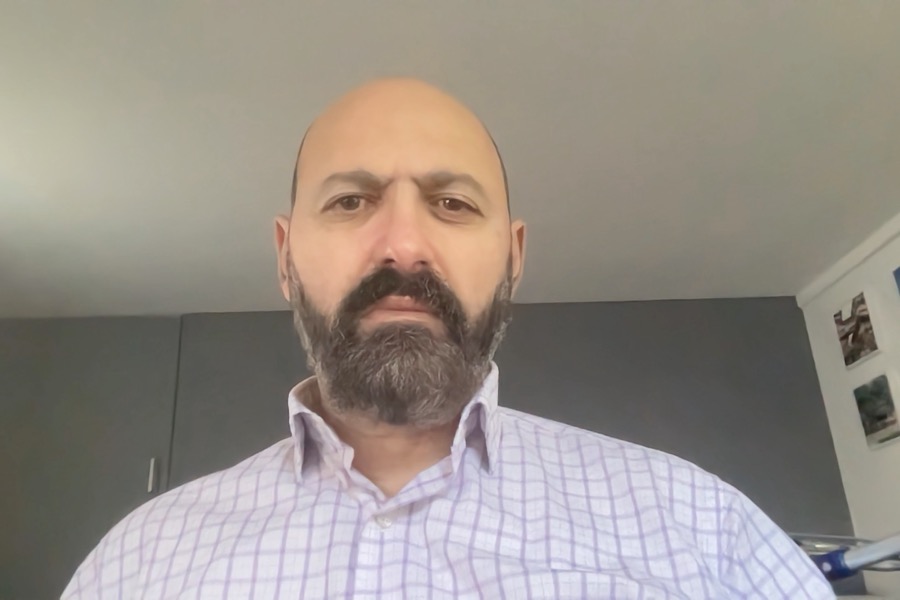
Built by someone who has carried the risk.
Ariel Egber is the founder and CEO of Metis. His career is in cybersecurity, and most of it in critical infrastructure: the environments where a security decision is also an operational one, and where a wrong call can reach beyond data into the physical world.
Working inside those environments, he saw the same problem from every side. Engineering teams were delivering change into OT platforms. Security teams were expected to sign it off. Neither had a consistent, defensible way to say how much risk the change actually introduced.
Metis is his answer to that gap: expert-level threat modeling that does not depend on which expert happens to be available, and that speaks the language of both the control room and the boardroom.
“A risk you cannot assess is a risk you cannot accept. Our job is to make it assessable.”
How Metis began
A project that introduced risk nobody could measure.
01
The requirement
A project required changes to an OT platform. Every change carried the potential to affect availability, safety or process integrity, and the delivery teams needed an answer on risk before they could proceed.
02
The gap
The teams involved could not assess it. IT security frameworks did not map cleanly to OT constraints, specialist time was scarce, and each assessor reached a different conclusion about the same system.
03
The decision
Rather than repeat a manual process that could not scale, Ariel set out to encode expert threat modeling into a platform that gives every team a consistent, reproducible, control-mapped assessment. That platform became Metis.
Background
Where the
experience
comes from.
-
01
Critical infrastructure security
Years spent securing the systems that keep essential services running, with a focus on protecting availability and safety, not only confidentiality.
-
02
OT and industrial control systems
Hands-on understanding of how OT platforms are built, changed and constrained, and why IT-centric security approaches break down when applied to them.
-
03
Risk assessment and threat modeling
Direct experience assessing the risk that projects and changes introduce, and turning findings into controls that engineering teams can implement.
-
04
Security leadership
Leading security work across engineering, operations and executive stakeholders, where assessments have to hold up to scrutiny from all three.